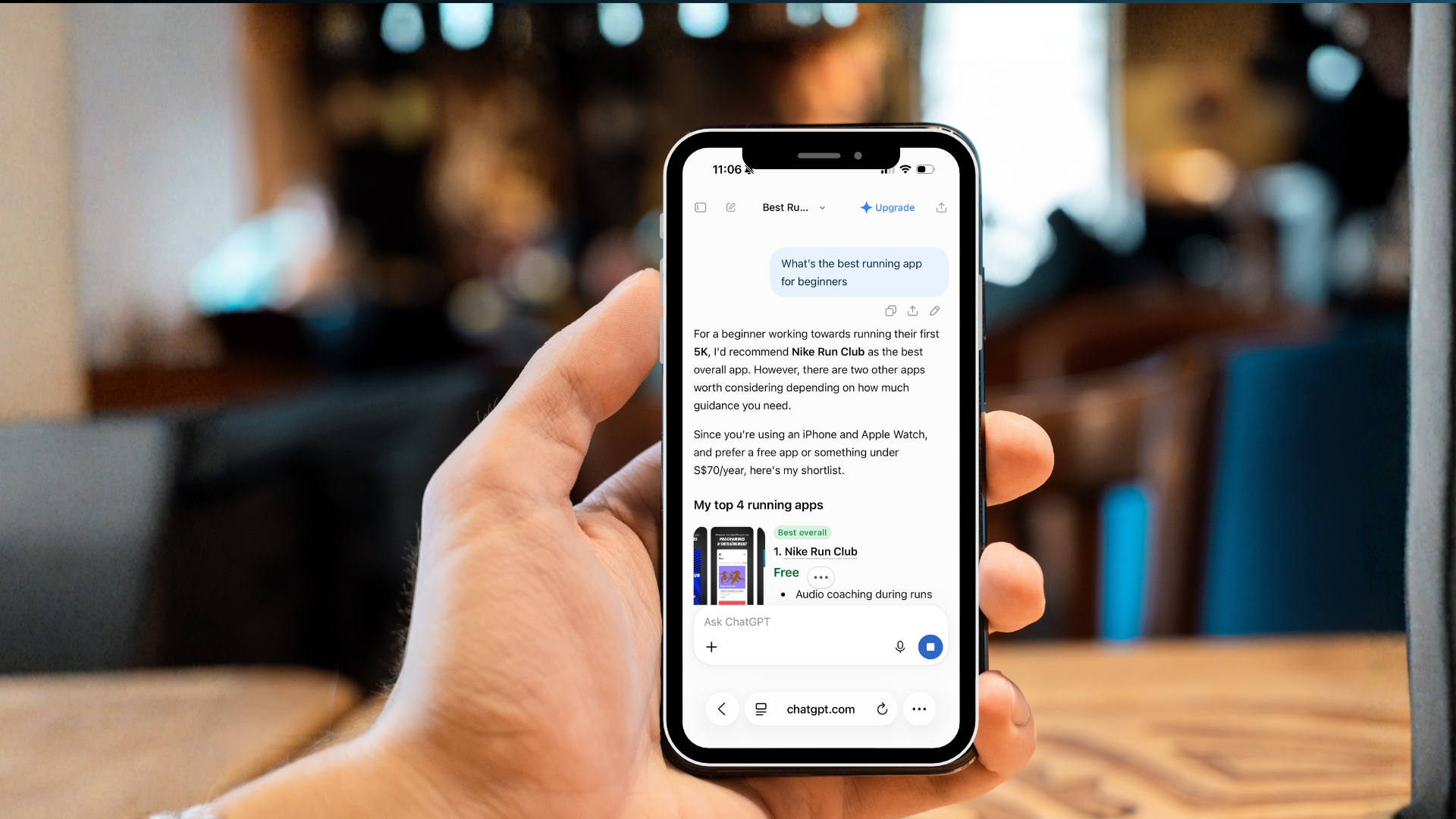

Think about the last app you downloaded. Did you search the App Store? Did you discover it through social media, a creator, an ad or a recommendation from a friend? Or did you ask an AI assistant to suggest the right app for your needs?
According to our latest research, The New Rules of App Growth, 29% of US consumers say they are more likely to use AI tools to find apps than they were 12 months ago.
For those consumers, app discovery no longer begins with a short keyword. It starts with a detailed question:
- “What is the best running app for a complete beginner?”
- “Which budgeting app is suitable for freelancers?”
- “Can you recommend a language-learning app for a busy professional?”
AI assistants can interpret these needs, compare potential solutions and present a shortlist. This brings product discovery closer to an answer-and-recommendation experience than a traditional Google search. That creates an important new question.
If someone asks AI for an app that solves their problem, will your app be recommended?
Improving AI app visibility is not about finding a loophole in a large language model. It is about making your product easier to understand, verify and confidently recommend.
This article explains how to do that.
What is AI app visibility?
AI app visibility describes how clearly and consistently an app appears in AI-generated answers, comparisons and recommendations. It includes whether an AI platform can:
- Identify what your app does.
- Understand who the app is for.
- Connect it with relevant problems and use cases.
- Distinguish it from competing products.
- Find credible evidence supporting its claims.
- Recommend it when the context is appropriate.
- Direct users to a page that continues the same message.
This is broader than being mentioned in an AI response.
An app could be visible but inaccurately described. It could appear for a broad category query but not for the higher-intent use cases it is particularly good at solving. It could also be recommended successfully but lose the prospective user when the product page fails to support the recommendation. Successful AI visibility therefore depends on three connected elements:
- Interpretation: Does the AI understand the product correctly?
- Evidence: Can it find information that supports the interpretation?
- Experience: Does the post-recommendation journey turn interest into downloads?
How AI is changing the app discovery journey
Traditional search places more responsibility on the user. A person searches for a term such as “running app,” reviews several results, opens different product pages, compares features and eventually decides which app to download.
AI-assisted discovery can compress several of those stages into one interaction. A user can provide many details in their prompt to ensure they receive the right recommendation, for example, the features they need, their goal, budget, personal circumstances, and even their level of experience. The AI assistant can then interpret those requirements and narrow the available options.
This shift does not mean that search engines, app stores, paid acquisition, organic social media or conventional ASO are becoming irrelevant. The official Google guidance states that established SEO practices remain relevant to generative search as its AI platforms retrieve information from web pages.
It means, however, that AI is becoming another layer between a user’s need and the products they consider.

From ranking for a keyword to earning recommendations
In conventional App Store Optimisation, marketers often think in terms of rankings. The higher your app ranks, the more likely users are to discover and download it. AI recommendations are less predictable. The same platform may produce different answers based on the context of the conversation, market or location, users’ requirements, or even how the question is worded. There may not be one stable position to track.
Instead of asking only, “Where does our app rank?”, you should also ask: “For which needs, audiences and use cases does AI consider our app a credible solution?” That is a more useful question because it connects visibility to positioning and customer intent.
AI changes discovery, not the fundamentals of marketing
It is easy to treat AI visibility as a completely new marketing discipline. In reality, many of the factors that make an app recommendable are the same factors that already support sustainable app growth, such as clear positioning, strong brand recognition or good ratings.
AI does not replace strong marketing, but it makes strong marketing easier to recognise and weak marketing harder to hide.
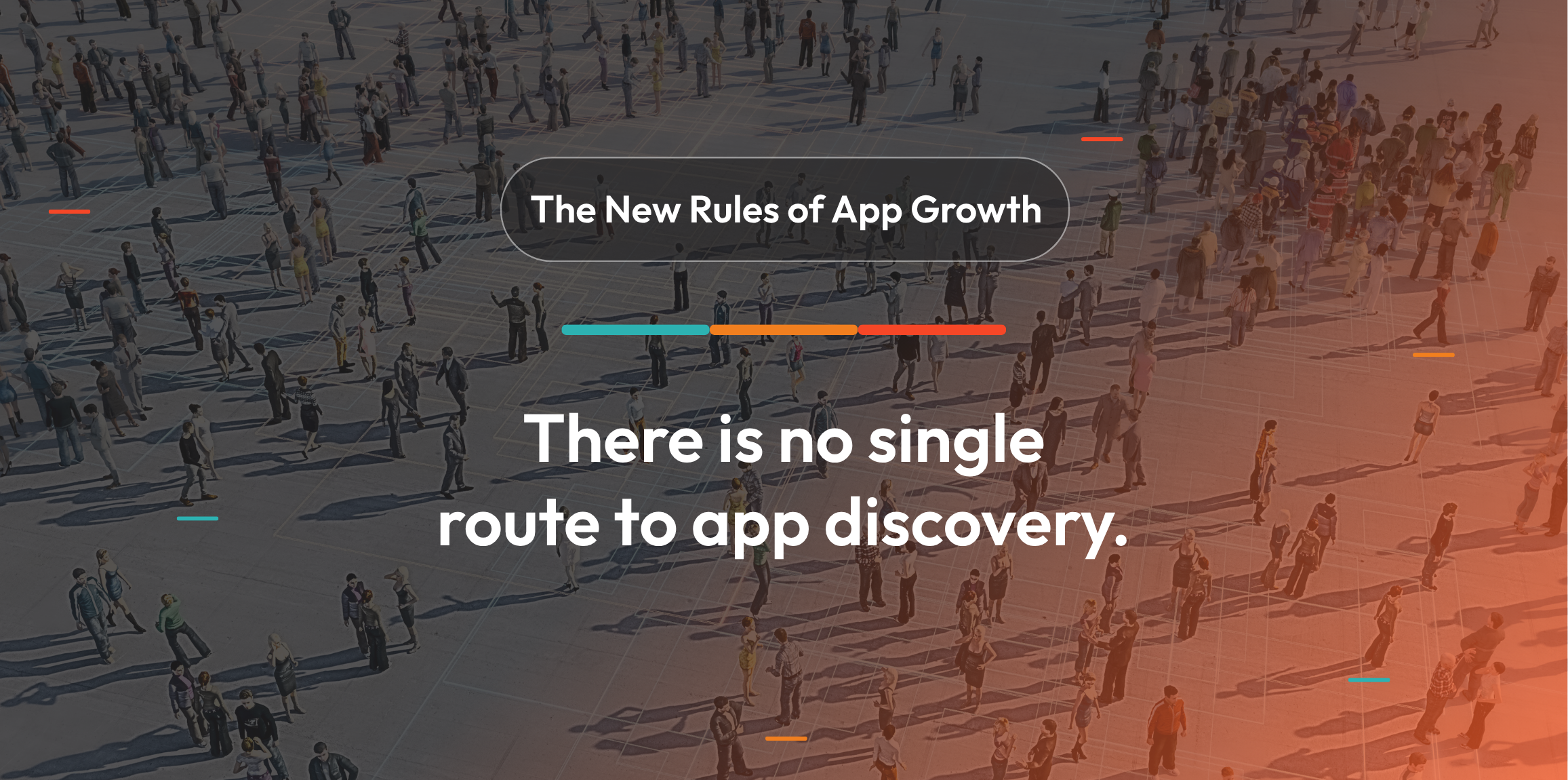
Our latest report found that there is no dominant route to app discovery, with no single channel reaching 40% of users. This fragmented journey makes clear and consistent positioning more important than ever.
The opportunity is to make good marketing easier for both people and machines to understand.
What makes an app ready for AI recommendations?
There is no universal checklist that guarantees your app will appear in an LLM response. Different AI platforms use different models, retrieval systems and information sources, and their answers may change depending on the user, prompt and context.
It is also important to distinguish between AI visibility and AI recommendation readiness.
An AI assistant may know that your app exists without understanding who it is for. It may understand your product without finding enough evidence to trust your claims. And it may trust your brand without deciding that the app is appropriate for a particular user.
To assess whether your app is genuinely ready to be recommended, consider these seven questions.
1. Entity clarity: Does AI understand what your app is?
AI should be able to identify your app’s category, audience, core use case, business model and differentiators from multiple reliable sources. If those details are vague or inconsistent, start by establishing a single, factual product description.
Vague campaign language may generate interest, but it does not always provide enough information for an AI system to interpret the product. For example: “The smarter way to reach your goals.”
This might work as a headline, but it does not explain what the product is, who should use it or what kind of goal it helps someone achieve.
A clearer description would be: “The app helps first-time runners complete structured beginner training plans through guided audio sessions, progress tracking and adaptable weekly goals.”
Entity clarity should be consistent across your app store listing, website, social profiles, product documentation and relevant third-party profiles.
How to assess your entity clarity?
Ask several AI platforms the same questions about your app, then compare their answers with your approved product information.
| Ask the AI platform | Check whether the answer | If the information is inaccurate or missing |
| What does [app] do? | Clearly identifies the app category, core functionality and main problem it solves | Clarify the product description across your website and app store listings |
| Who is [app] designed for? | Accurately describes your primary audience and relevant use cases | Strengthen audience-specific messaging on product and use-case pages |
| What are [app’s] main features? | Identifies three to five current features without confusing them with discontinued or competitor features | Update feature pages, app listings, help-centre content and product documentation |
| Is [app] free or paid? | Explains the current pricing model, free trial and subscription options correctly | Align pricing information across all owned channels and update outdated third-party profiles |
| Which platforms and markets does [app] support? | Provides accurate information about operating systems, devices, languages and geographic availability | Make availability information easier to find on your website and app store pages |
| How is [app] different from its main competitors? | Identifies genuine differentiators rather than relying on vague marketing claims | Define your strongest points of differentiation and support them with specific evidence |
What to do next: Define the audiences, use cases and differentiators you want your app to be known for. Reflect them consistently across your website content, meta descriptions, ASO metadata and app store listing. Then build supporting evidence by encouraging detailed reviews from relevant users, pitching targeted editorial stories and updating inaccurate third-party profiles.
2. Intent coverage: Does AI understand which customer needs your app solves?
Knowing what your app does is not enough. AI also needs to understand when and for whom it is relevant.
A running app might support beginners, returning runners or marathon training, but it may be a stronger fit for some needs than others. To improve AI app visibility, focus your content on the audiences, problems, and use cases your app serves best.
What to do next: Identify your highest-value recommendation contexts by asking:
- Which audiences are the best fit for our app?
- What goals or problems bring them to the product?
Prioritise these areas rather than creating thin pages for every possible AI prompt. For example, if beginner runners are a key audience, create a comprehensive resource explaining how your app supports their first weeks of training and helps them remain consistent.
“Not every AI recommendation opportunity is equally valuable. App teams should focus on three factors: commercial potential, product relevance, and competitive opportunity. The best place to start is with your highest-value customer segments, mapping them to the AI recommendation scenarios that matter most. Rather than chasing every mention, focus on the opportunities where your app delivers real value and has the greatest potential to drive meaningful business results.”
Igor Blinov, AI & ASO Director
3. Evidence: Can AI find credible information supporting your claims?
Your website and app store listing explain what your app offers, but independent sources can help support those claims. Reviews, editorial coverage, customer stories, community discussions and industry recognition may all provide useful evidence.
The strongest evidence is specific. If you position your product as a running app for beginners, look for reviews, case studies and external coverage that connect it directly with first-time runners.
This makes AI visibility a cross-functional responsibility. It requires teams to work together across product marketing, ASO, UA, PR, community management, customer experience, and more, to align across all touchpoints.
What to do next: Choose the audiences and use cases you want to own, then check whether they are supported across:
- App store metadata and descriptions
- Website titles and meta descriptions
- Customer reviews and case studies
- Editorial and industry coverage
- Community discussions
Where evidence exists, make the connection clear and consistent.
4. Consistency: Do owned and third-party sources tell the same story?
Evidence becomes more useful when different sources present a coherent picture of the product.
Review how your app is described across all platforms. The wording does not need to be identical everywhere, but the underlying product facts should align. For example, imagine that your website positions the app as suitable for complete beginners, but your app store listing focuses on experienced athletes while your help centre describes the training plans as intermediate.
These sources tell conflicting stories. That makes it harder for both prospective customers and AI systems to determine who the product is actually for.
Consistency also applies to practical details such as pricing, features, integrations, supported markets, etc.
What to do next: Compare your most important product information across these sources. Flag anything outdated, contradictory or unclear, assign an owner and update the highest-visibility pages first.
5. Trust: Is there enough evidence for AI to use your app confidently in an answer?
Consistency and evidence contribute to a broader question of trust.
An AI assistant may understand your app and find information about it without having enough confidence to include it in a recommendation. Trust is not simply about the number of times your brand is mentioned. Ten low-quality or repetitive mentions do not necessarily carry more weight than one detailed and credible evaluation.
What to do next: Identify your strongest claims and check whether each one is supported by independent coverage, detailed customer reviews or verifiable product information. Address unsupported claims and prioritise outdated or inaccurate sources that could create confusion.

6. Recommendation: Is your app appropriate for this specific user and context?
An app may be well understood, supported by evidence and trusted without being suitable for every user. The goal is not to position your app as the best choice for everyone, but to make its strongest recommendation contexts clear.
What to do next: Identify the audiences, needs and situations where your app offers the strongest fit. Prioritise these contexts instead of trying to appear for every possible use case.
Conversion: does your app store page deliver on what the AI promised?
Remember, the journey does not end when AI recommends your app. Your landing pages, app store listing, screenshots and Custom Product Pages should reinforce the audience, use case and value highlighted in the recommendation. The wording does not need to be identical, but the message should remain consistent.
7. Measurement: Does AI exposure generate visits, installs, leads or revenue?
Appearing in an AI-generated answer is valuable only if the exposure contributes to a meaningful business result. AI visibility should therefore be connected to performance indicators such as website visits from AI platforms, App store product-page views, app installs, trial starts, user registrations, etc.
It’s worth mentioning that measurement can be difficult because the user journey may cross several platforms. A person might discover your app through an AI assistant, search for the brand separately, visit your website and later download the app from an app store. There’s no single analytics platform that can capture that complete journey.
For this reason, measurement should combine multiple sources, including AI referral traffic, website analytics, app store acquisition data, etc. Check out our recent guide, How to measure your app’s visibility in AI search, for a step-by-step process.
And remember, the goal is not simply to appear in more AI responses. The goal is to attract relevant users and turn AI exposure into sustainable app growth.
From visibility to genuine recommendation readiness
These seven questions represent a progression rather than seven isolated optimisation tasks.

An app may perform well at the first few layers without being genuinely recommendation-ready.
Visibility means AI knows your app exists. Recommendation readiness means AI understands when to recommend it, can find enough evidence to do so confidently, and sends users into a journey that creates measurable business value.
Improving AI app visibility therefore requires more than adding AI-focused language to your app store description. It requires your positioning, content, product information, third-party evidence and conversion journey to work together.
AI visibility is not just about being found
AI is changing how users discover and choose apps, but as mentioned above the fundamentals of effective app marketing remain the same. Your app still needs to solve a meaningful problem. It needs a clear position, a credible reputation and a product experience that delivers on the promise made during discovery.
The difference is that your marketing must now communicate effectively to two connected audiences:
- People, who want to understand quickly whether your app can solve their problem.
- AI systems, which need clear product facts, relevant context, consistent information and credible evidence before they can recommend it confidently.
Improving AI app visibility is therefore not about chasing mentions across every LLM. It is about building a connected discovery experience in which your app can be understood, verified, selected and measured.
Is your app ready to be recommended by AI?
AI is reshaping app discovery, and adapting to this new landscape can feel exciting and overwhelming at the same time.
If you want to stay ahead, understand how AI platforms currently interpret your app and whether they have enough credible information to recommend it confidently, book an AI Search Readiness Audit. Our growth team will help you uncover AI search opportunities and make the best recommendations for your app.