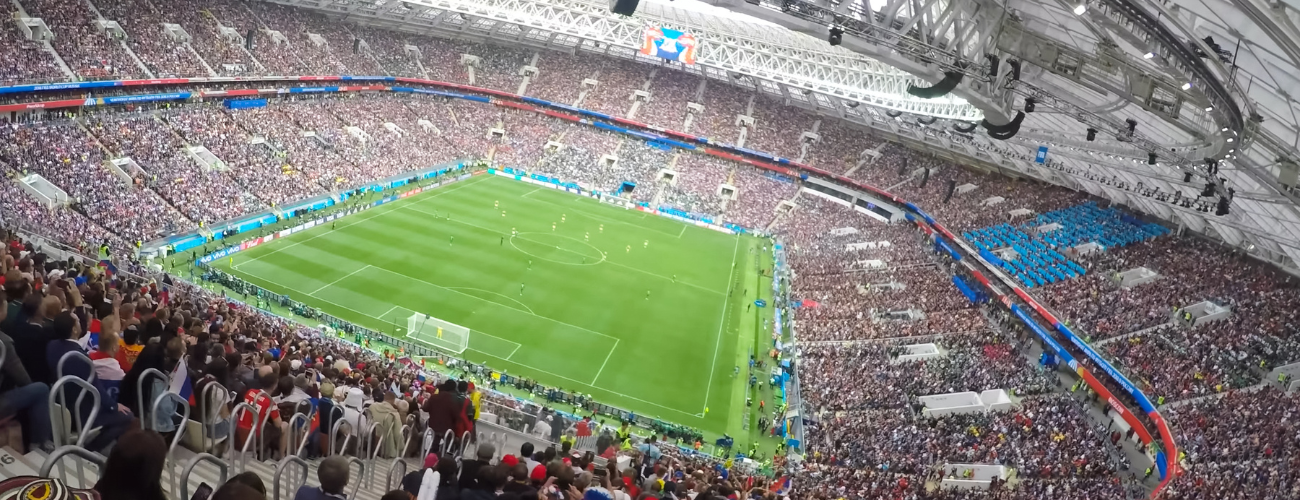

The 2026 FIFA World Cup will be one of the largest digital attention events the app economy has ever seen. More than half the world’s population tuned into the 2022 World Cup, with that number expected to rise now that more teams have qualified, and the US, Canada and Mexico are the joint hosts.
Across streaming, sports, betting, gaming, fantasy, commerce, travel and social apps, billions of users will simultaneously turn to mobile to follow matches, react in real time, and engage with tournament moments, for app marketers, that creates enormous opportunity – but also enormous competition.
During the 2022 World Cup, apps saw dramatic increases in installs and revenue as demand surged globally. But success during a tournament of this scale is not simply about increasing spend. Every major app is competing for the same audiences, the same attention, and the same visibility in the app store.
The brands that win are the ones that prepare before the first whistle.
World Cup app marketing demand is global, but user behaviour is not
One of the biggest mistakes app marketers make during global sporting events is treating audiences as one uniform group.
World Cup demand behaves differently by market, team relevance, player loyalty (or disloyalty), kick-off times, and cultural engagement. Some regions sustain interest throughout the tournament, while others spike heavily around national team matches or knockout stages. For example, the Republic of Korea’s opening match against Uruguay in 2022 drew 11.14 million Korean viewers, a 97% increase on the country’s average group-stage audience at the previous World Cup, showing how national-team relevance can sharply accelerate local demand.
User intent also changes quickly throughout the tournament:
- Before matches: Users search for fixtures, predictions, team news and streaming options.
- During matches: Demand shifts towards live scores, second-screen experiences, betting, fantasy updates and reactive social content.
- After matches: Attention moves to highlights, analysis, memes, commentary and community discussion.
- Throughout the tournament: Users continue looking for streaming, gaming, travel, social, news and insight-led experiences.
This creates multiple high-intent windows, rather than one continuous demand curve, where app visibility matters more than ever.
Build app store optimisation relevance before demand peaks
By the time the World Cup starts on the 11th of June, the most valuable App Store visibility opportunities are already in motion. ASO should begin weeks before kick-off because, as demand rises, more apps compete for the same football-related search terms, increasing pressure on both organic and paid visibility.
Successful World Cup ASO strategies should focus on:
- Expanding keyword coverage around tournament, team and real-time intent
- Localising metadata for priority markets
- Structuring Custom Product Pages (CPPs) and Google Play Custom Store Listings (CSLs) around different audience motivations
- Aligning screenshots and creatives to live tournament narratives
- Preparing In-App Events and featuring submissions ahead of key moments
Importantly, World Cup search behaviour is highly intent-driven. Users are not simply searching for “football app”. They are searching:
- “Watch World Cup live”
- “England fixtures”
- “Live football scores”
- “Fantasy football”
- “Penalty shootout game”
- “Flights to…”
The apps that organise their App Store presence around these evolving intent clusters will be significantly better positioned to capture demand.
Prepare paid user acquisition for higher costs and faster volatility
The World Cup creates one of the most competitive paid media environments in mobile marketing. CPMs rise, CPI inflation increases, and creative fatigue accelerates as every major advertiser tries to capitalise on the same moments at the same time.
That means efficiency becomes just as important as scale. Ultimately, every app has access to the same ad platforms and algorithms; the best apps win by utilising what they have available to their own advantage.
Rather than treating the tournament as one continuous campaign, high-performing User Acquisition teams should build around key spikes in attention:
- Opening matches
- National team fixtures
- Rivalries
- Knockout rounds
- Final stages
Budgets should remain flexible enough to scale during peak engagement windows and pull back when competition overheats.
Alignment between ASO and paid media also becomes critical. If paid campaigns drive football-related demand, but App Store creatives and metadata do not reflect that same user intent, conversion rates will suffer.
The strongest-performing campaigns are usually those where paid creatives, ad messaging, CPPs, CSLs, metadata and app experience all reinforce the same tournament narratives across the full user journey from first impression to install.
Use a creative strategy as your biggest tournament differentiator
During major sporting events, creative often becomes the single biggest performance differentiator because the real advantage comes from how quickly brands can turn tournament moments into relevant creative.
The challenge is that creative fatigue happens significantly faster during the World Cup. Audiences are exposed to an overwhelming volume of football-themed advertising across every platform, meaning static messaging quickly loses effectiveness.
Winning brands plan for creative iteration before the tournament begins. That includes team-specific creative localisation, real-time score and outcome reactions, match-day creative swaps, UGC and creator-led content, reactive social trends and memes, countdown and hype-driven messaging, and emotion-led storytelling tied to national pride, national heroes, villains and tournament moments.
During the 2014 FIFA World Cup, Luis Suárez bit Giorgio Chiellini during Uruguay vs Italy. Snickers responded almost immediately with a reactive tweet tying the incident to its “You’re not you when you’re hungry” platform. The execution generated 43,000 retweets in 24 hours and 38.7 million earned media impressions in two days.
The best campaigns are not just football-themed; they enable fans to feel connected to what is happening in real time.
Move faster than the World Cup conversation
World Cup performance can change within hours. A team qualifies unexpectedly, a major nation gets knocked out, a viral moment dominates social media, or a relative nobody becomes a national hero, and user behaviour can shift instantly.
The brands that succeed during the tournament are usually those operating with:
- Real-time reporting
- Fast creative approval processes
- Flexible budget allocation
- Rapid ASO and paid optimisation
Cross-functional alignment between ASO, UA, CRM and creative teams. When half the world is watching and the next match is only hours away, reacting days later is already too late.
Final thoughts
The 2026 World Cup will create enormous growth opportunities for apps across sport, streaming, gaming, social, commerce and entertainment, but it will also create one of the most competitive mobile marketing environments of the decade.
The apps that succeed will not necessarily be the ones spending the most. They will be the ones who prepare earlier, align ASO, user acquisition, and creative strategy, localise effectively, react quickly, understand changing user intent, and execute consistently throughout the tournament. When global attention peaks, visibility alone is not enough. The real winners will be the apps that stay relevant in every moment that matters.